A week on a sailing boat is a wonderful way to see Greece, and you don’t need any experience to enjoy it. This guide takes you through the decisions in the right order, with the things nobody tells you before your first trip.
Your first sailing trip at a glance
Licence: not needed if you sail with a skipper
Easiest areas: the Saronic Gulf and the Ionian Sea
Best months: June and September; May and October are quieter
Ideal length: 7 days
When to book: 3–6 months ahead for July and August
1. Choose your sea
Greece has several very different sailing areas. For a first trip, choose by the kind of holiday you want, not by the most famous island.
The Saronic Gulf. The marinas are about an hour’s drive from Athens airport. Short distances, calm water and lively harbour towns like Aegina, Poros and Hydra. The easiest start. Read the Saronic Gulf sailing guide.
The Ionian Sea. Green islands, sheltered bays and gentle winds that build in the afternoon. Paxos, Antipaxos and Lefkada are the classics. See the Ionian sailing week.
The Cyclades. White villages and the bluest water, but also the meltemi, a strong summer wind. Better in June or September, or if you enjoy a livelier sail. See the Cyclades sailing week.
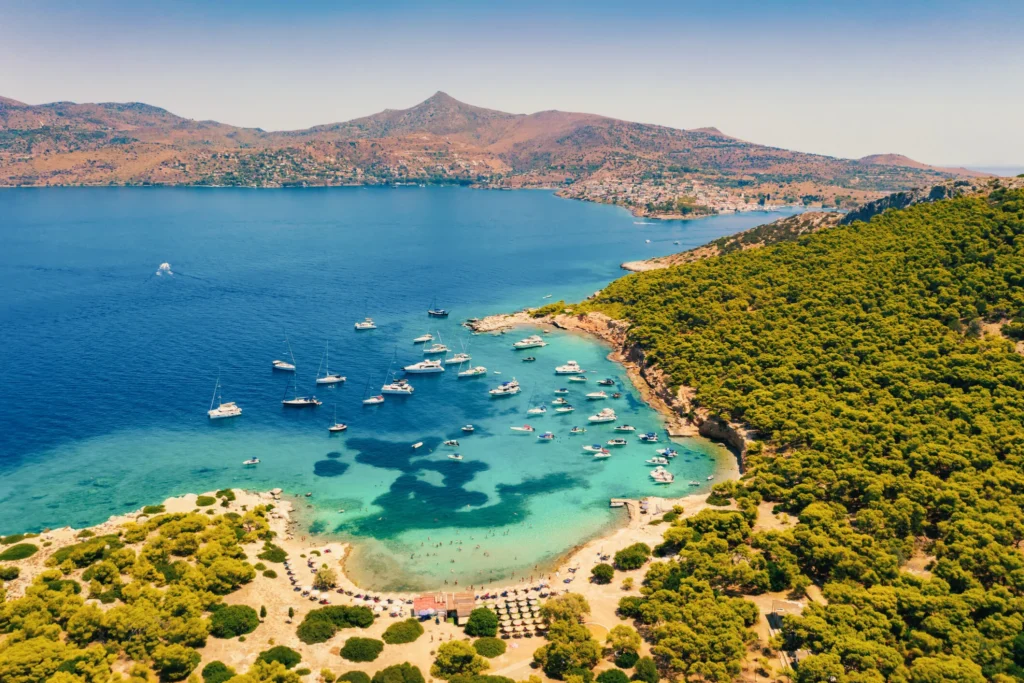
A bay off Moni island in the Saronic Gulf: an easy first anchorage.
2. Pick the right time
May and October. Quiet harbours and warm days. The sea is still cool in May; October can bring the first autumn weather.
June and September. The best of everything: warm sea, settled weather, fewer boats. The sweet spot.
July and August. Hot, busy and the windiest time in the Aegean. Wonderful in sheltered areas, but harbours fill up early.
3. Sail with a skipper
You don’t need a licence or any sailing experience if a professional skipper comes with you. The skipper sails and moors the boat, checks the weather every day and chooses safe anchorages. You can help with the ropes and take the wheel, or just swim, eat and sleep.
A good skipper is also your local guide. They know the coves that aren’t in the guidebooks, which taverna is worth the walk and where to anchor so you wake up with the bay to yourselves.
Skipper’s note: The skipper lives on board with you, usually in a small cabin at the front or a separate crew cabin. Check where before you decide on the boat, so you don’t lose a cabin you were counting on.
4. Choose the boat
The main choice is a monohull (the classic sailing yacht) or a catamaran (two hulls, more space, almost no heeling). Monohulls give you the real sailing feeling and are more budget-friendly; catamarans are more comfortable for families, groups and anyone who worries about seasickness. The full comparison is in Catamaran vs Monohull.
Every charter boat has a kitchen, toilets with showers, a fridge, a cockpit table and cushions. Many also have air-conditioning, a generator or a watermaker, but not all, so ask if they matter to you.
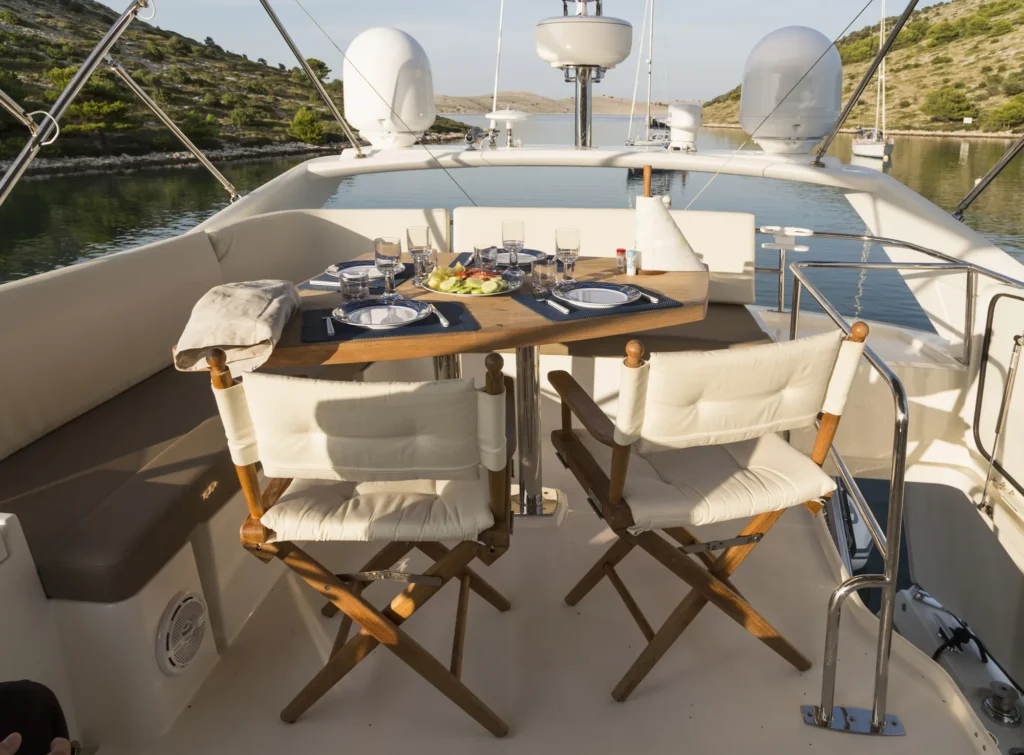
Breakfast set on deck, before the first swim of the day.
5. Plan a relaxed route
In most areas islands are 10 to 20 nautical miles apart: two to four hours of sailing. That leaves plenty of time to swim, explore villages and eat well. The best first trips have short legs and fewer islands, not more.
Routes also depend on the wind. A good plan has a few fixed points and lots of flexibility: if you love a bay, you stay; if the wind turns, the skipper changes the order.
Skipper’s note: In summer the wind usually picks up after midday. Sail in the morning and be at anchor or in the harbour by early afternoon, which is also when the best spots on the quay are still free.
6. Understand the cost
The price depends on the boat, the season, how far ahead you book and the extras: skipper, fuel, marina fees, food on board and the final cleaning. It can be more affordable than people think when the cost is shared by a group. This guide explains what affects the cost of a sailing holiday in Greece, without the marketing.
7. Book early
For July and August, the best boats are often booked three to six months ahead, sometimes earlier for catamarans. For June and September you have a bit more time. Booking early is less about price and more about choice.
What life on board is really like
Marinas, quays and anchorages. Most nights you moor stern-to on a town quay or anchor in a bay. Real marinas are fewer than people expect. Nights at anchor are the ones guests remember.
Water and power. The tanks are limited. Take short showers and charge phones while the engine is running, and water and power will last at anchor.
The marine toilet. Used toilet paper goes in the bin, never in the toilet. It is the first thing the skipper will tell you, and the most important.
Shoes off. Bare feet or soft, non-marking shoes on deck.
Food. Breakfast and lunch are usually on board, dinner in a taverna. Provisioning can be delivered to the boat before you arrive.

Life on deck: the best room on the boat.
What to pack
Bring a soft bag, not a hard suitcase: everything is stored in lockers and under bunks. And bring less than you think.
Essentials. Swimsuits, a beach towel, sunglasses, a hat, ocean-friendly (mineral) sunscreen.
For the evenings. A light jacket or jumper. It can get cool at sea after sunset, even in July.
Shoes. Flip-flops for the harbour, water shoes for rocky beaches, soft shoes for the boat.
Useful extras. A mask and snorkel that fit, a dry bag for the dinghy, a power bank, some cash for small harbours and tavernas.
Mistakes first-timers make
Too many islands. Trying to see six islands in a week means long days at sea. Three or four, done well, is better.
No ‘lazy day’. Leave one day with almost no sailing. It is usually the favourite.
Ignoring the wind. In the Cyclades in high summer the meltemi decides the route. Plan with it, not against it.
Overpacking. You will live in swimwear. Half the clothes usually go home unworn.
Cutting it too fine. Charter weeks usually start in the late afternoon. Flying in that morning is fine; flying in an hour before is stressful.
Questions first-timers ask
Do I need a sailing licence to rent a boat in Greece?
Not if you sail with a professional skipper. The skipper is responsible for the boat, so you can simply enjoy the trip.
Will I get seasick?
Most people are fine in calm areas like the Saronic Gulf or the Ionian, especially with short legs in the morning. A catamaran moves even less.
How many people can come?
Charter yachts usually take four to ten guests, depending on the size and type of boat.
Can we choose the route?
Yes. A tailor-made trip is built around what you want to see, then adjusted day by day for the wind.
Is it suitable for children?
Very much so. Read sailing in Greece with kids.
Keep reading
Catamaran vs Monohull · which boat to choose
What affects the cost · boat, season and extras explained
Sailing the Saronic Gulf · the easiest first trip from Athens
Sailing in Greece with kids · a practical family guide