Sailing guides › Why sail in Greece
Why Greece Is One of the Best Countries in the World for Sailing
Greece is not just a beautiful place to sail. It is one of the few countries where sailing simply makes sense: the geography, the weather, the distances and the harbours all work together, so a week at sea feels easy, flexible and relaxed.
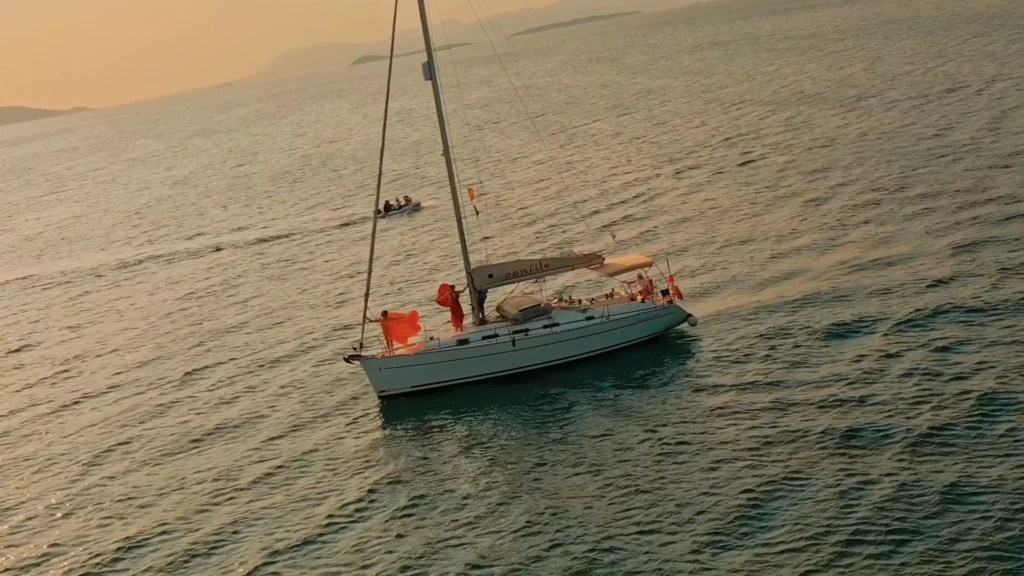
A sailing yacht in the Saronic Gulf, close to Athens.
Greece for sailing at a glance
Islands: around 6,000 islands and islets, about 227 of them inhabited
Coastline: roughly 13,600 km, the longest in the Mediterranean
Main sailing season: May to October
Between islands: often 10–20 nautical miles, 2–4 hours of sailing
Main areas: the Saronic Gulf, the Cyclades and the Ionian Sea
1. A country shaped by the sea
Greece has around 6,000 islands and islets, and one of the longest coastlines in the world for its size. Wherever you are, the next bay, village or island is close. For sailors this means endless route options, plenty of shelter, and trips that can be shaped around very different travel styles, experience levels and lengths of time.
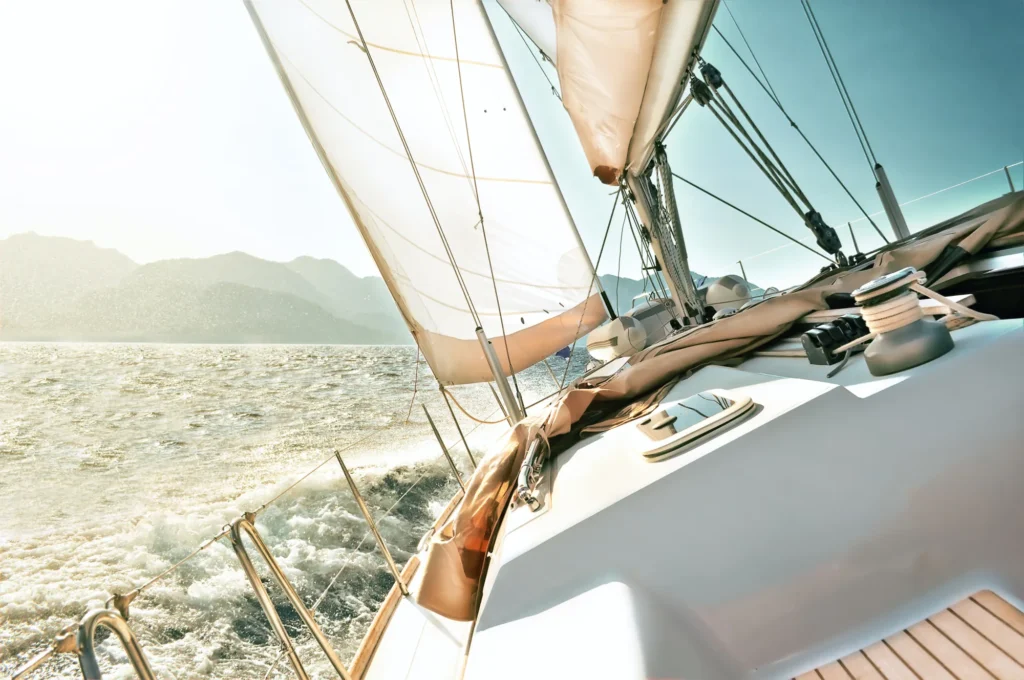
Open water in the Aegean, with the next island always on the horizon.
2. Short distances make sailing enjoyable
In most areas the islands are only 10 to 20 nautical miles apart. That usually means two to four hours of sailing a day, which is ideal for relaxed cruising. Instead of spending whole days at sea, you have time to swim, explore villages, eat well or simply do nothing on deck.
This matters most for families, first-time sailors and anyone who wants a holiday rather than a sailing marathon.
Skipper’s note: The best weeks are not the ones with the most miles. Three or four stops, with one lazy day at anchor, beat six islands in a rush.
3. Reliable summer weather, with a choice of wind
From May to October Greece has long sunny days and stable weather. In summer, air temperatures are usually between 25°C and 35°C, and the sea is warm enough to swim in every day.
The wind is part of the choice. In the Aegean, the meltemi blows from the north in July and August, which is perfect for people who love real sailing. The Ionian Sea and the Saronic Gulf have calmer water and gentler winds, ideal for families and first trips.
The Saronic Gulf. Close to Athens, short hops, lively harbour towns. See Aegina, Poros and the Saronic Gulf guide.
The Cyclades. White villages, the bluest water and more wind. See the Cyclades sailing week.
The Ionian Sea. Green islands and sheltered bays. See the Ionian sailing week.
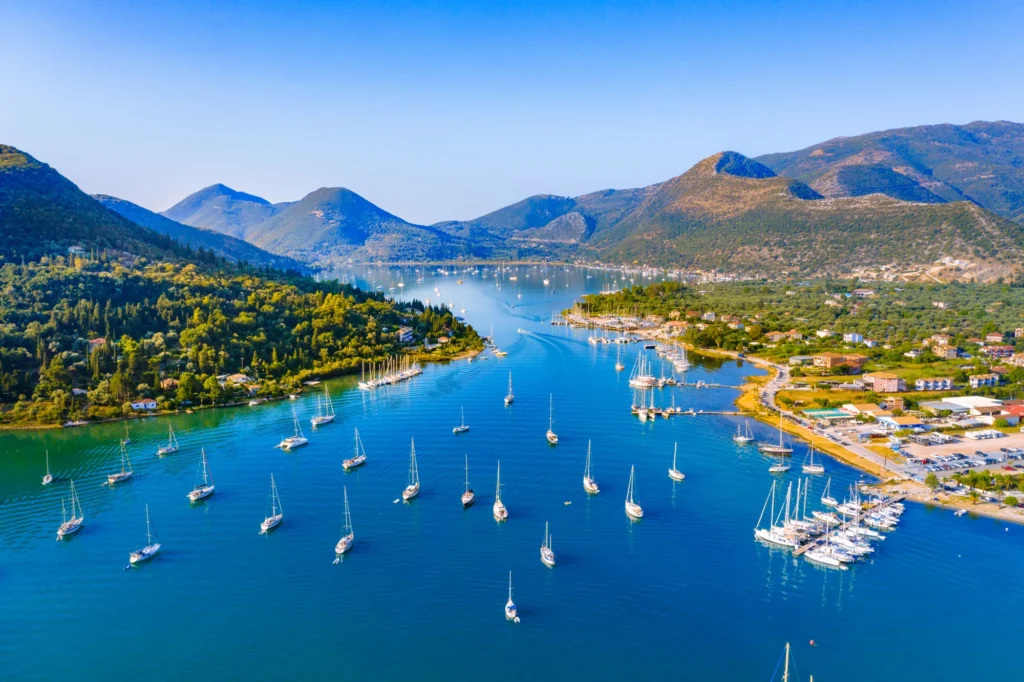
A green bay near Lefkada in the Ionian Sea.
Skipper’s note: If anyone in your group worries about seasickness, choose the Saronic or the Ionian in July and August, and keep the Cyclades for June or September.
4. Harbours, marinas and anchorages everywhere
Greece has one of the largest yacht charter fleets in the world, with sailing yachts and catamarans based all around the country. There are marinas, town quays and natural anchorages at almost every turn, many right next to a village or town.
Provisioning is easy, fuel and water are never far away, and professional support is widely available. That is why a sailing holiday in Greece is accessible even with no sailing experience, as long as you travel with a skipper.
Skipper’s note: Most nights you moor stern-to on a town quay, not in a marina. You step off the boat straight into the village, which is one of the great pleasures of sailing in Greece.
5. Sailing and culture go together
In Greece, sailing is never cut off from life on land. Many harbours are a short walk or taxi ride from ancient sites, traditional villages and local markets. In a single week you might see a temple, a medieval castle and a quiet fishing harbour.
In the Saronic Gulf alone there is the Temple of Aphaia on Aegina, the ancient theatre of Epidaurus a short ride from Palaia Epidavros, and the ruins of the Temple of Poseidon on Poros.
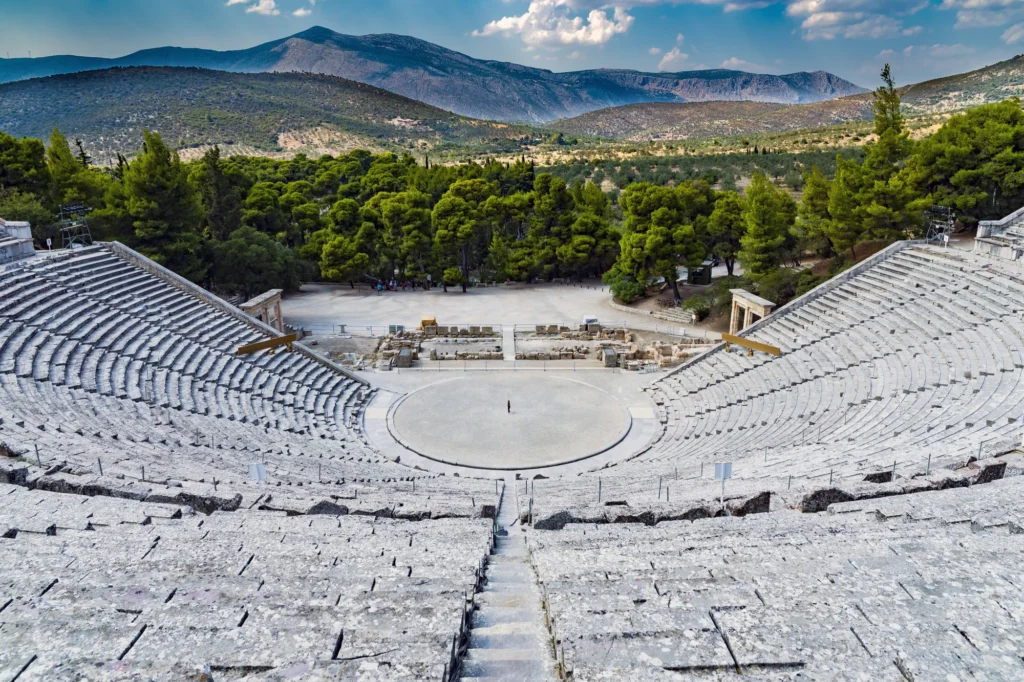
The ancient theatre of Epidaurus, a short ride from the harbour of Palaia Epidavros.
6. The food
Fresh fish, local vegetables, olive oil, cheese and wine are part of everyday island life, and the taverna is often just a few steps from where you moor. Lunch is usually on board at anchor, dinner on the waterfront.
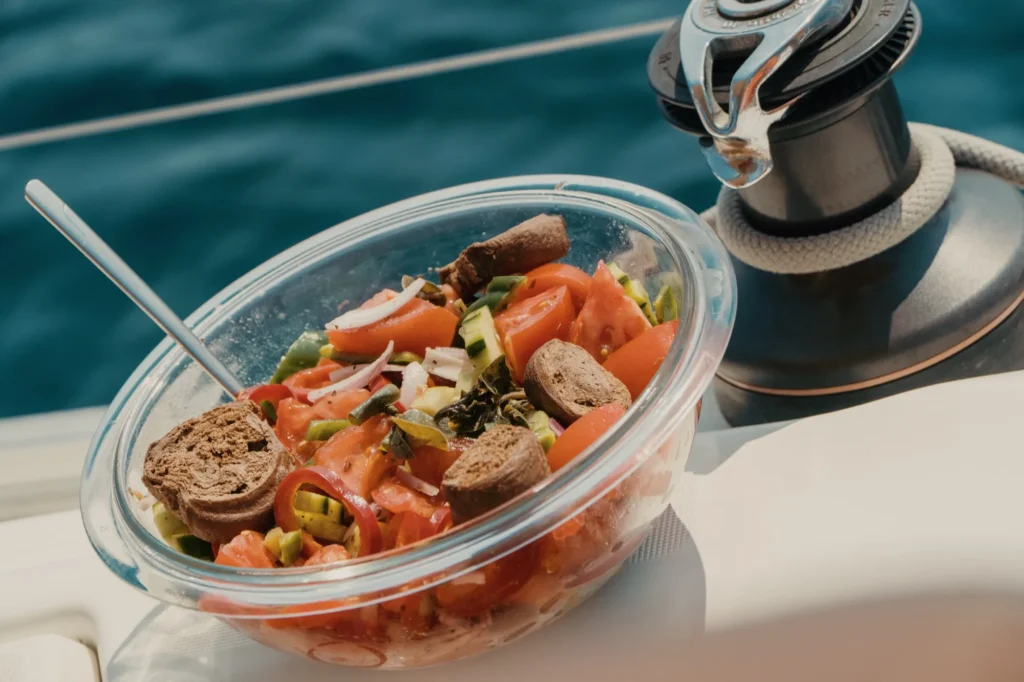
A Greek salad on deck between swims.
Skipper’s note: Fresh fish in tavernas is sold by the kilo. Ask to see the fish and the price per kilo before you order, then let them grill it simply with lemon and olive oil.
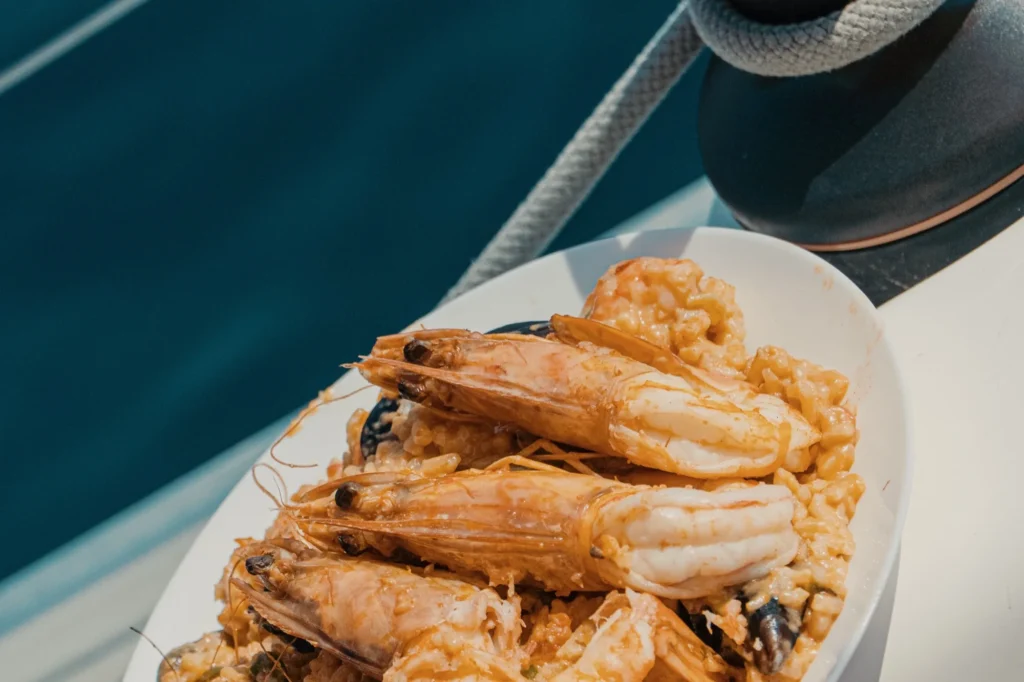
Shrimp pasta for lunch at anchor.
7. Good value for what you get
Compared with other famous sailing destinations, Greece offers very good value. There are boats for a wide range of budgets, harbour fees are generally reasonable and eating out is still affordable. With good planning you can enjoy a high-quality sailing holiday without unnecessary costs. Here is what affects the cost.
8. It suits almost every kind of traveller
Greece works just as well for couples, families and groups of friends, and for people looking for privacy or for social life. You can plan quiet routes with secluded bays, or include lively islands with music and nightlife. Few countries offer this much choice within such short distances.
Couples. Sunsets, quiet bays and white villages. Read the 5 most romantic sailing destinations.
Families. Calm water, short legs and easy swimming. Read sailing in Greece with kids.
First-timers. No licence needed with a skipper. Read how to plan your first sailing holiday.

Friends on a sailing holiday in Greece.
Why planning makes all the difference
As easy as Greece is for sailing, how good your week turns out depends on choosing the right area, the right boat and a realistic route for your dates and your group. A good plan keeps the trip comfortable, safe and enjoyable from the first day to the last.
Questions about sailing in Greece
When is the best time to sail in Greece?
June and September are the sweet spot: warm sea, settled weather and fewer boats. May and October are quieter, July and August the hottest and busiest.
Which part of Greece is best for sailing?
For a first trip or a family, the Saronic Gulf or the Ionian Sea. For white villages and more wind, the Cyclades.
Do I need sailing experience?
No. With a professional skipper on board you don’t need a licence or any experience.
How long should a sailing trip in Greece be?
A week is ideal. It gives you time to settle in, slow down and see three or four islands properly.
Keep reading
How to plan your first sailing holiday · a step-by-step guide
Catamaran vs Monohull · which boat to choose
Sailing the Saronic Gulf · the easiest islands from Athens
Not sure which area or boat fits you?
Tell me your dates, who is coming and what you would like from the week. I reply personally by email with a route and boat options that actually fit, without pressure.
Request a free proposalOr write to me at info@puntovoyage.com.